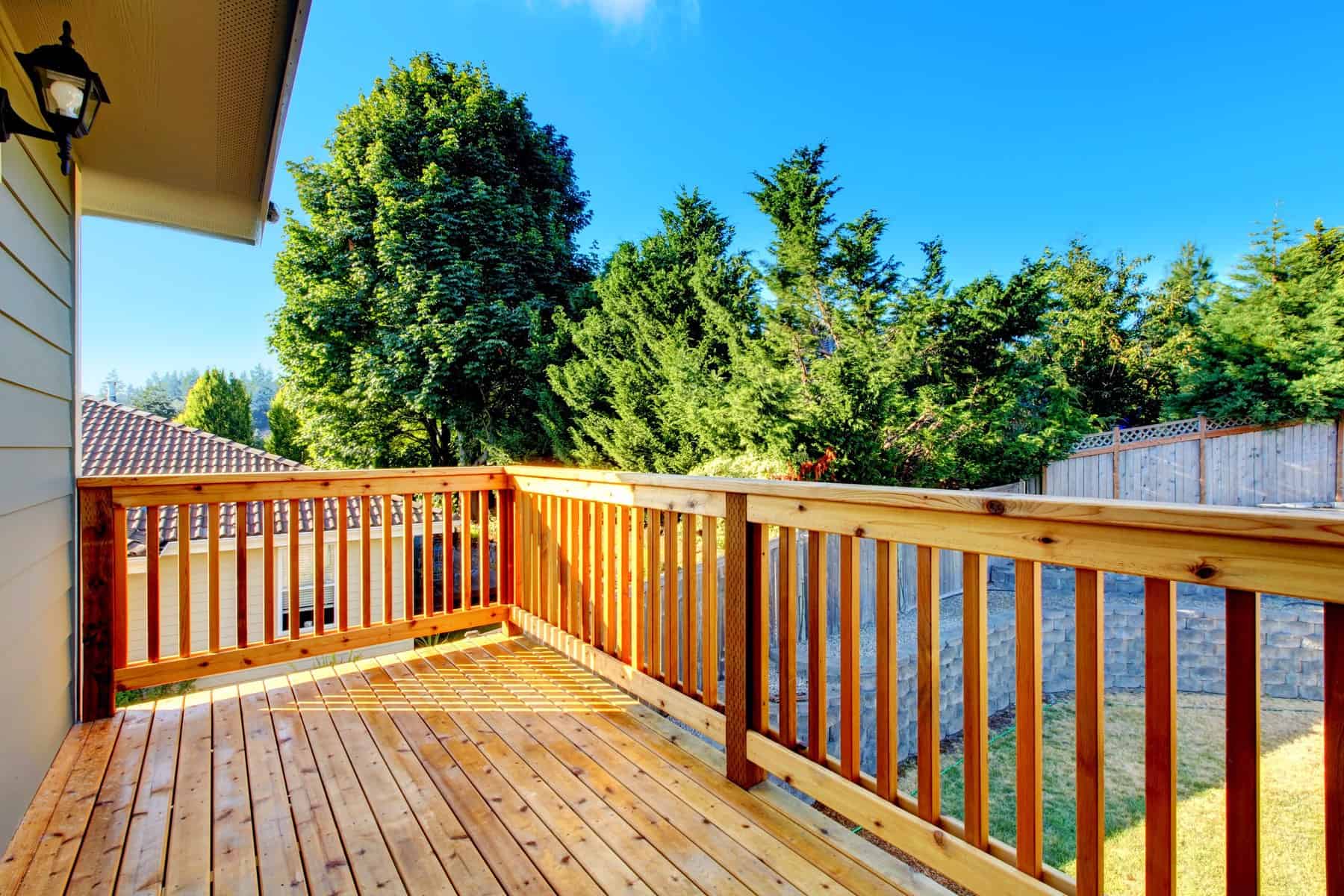
Every spring, homeowners in West Bloomfield step onto the deck, run a hand across a gray, thirsty board, and wonder when to stain a deck before another Michigan season does real harm. It is a fair thing to ask, and the honest answer is not a single date on the calendar. How often to stain a deck depends on the finish already on the wood, how much sun and foot traffic the boards take, and how our freeze and thaw winters treat the surface. That is exactly the kind of question our team answers every week through our deck and fence staining service, and the good news is that the timing is easier to read than most people expect.
A deck is one of the few parts of a home that gets walked on, rained on, snowed on, and baked by the sun, often in the same month. So the wood wears faster than your siding or your fence. This post lays out clear timing, a simple at home test, and the reason stain usually beats paint on a Michigan deck. The goal is to help you act at the right moment, not too early and not too late.

How Often to Stain a Deck in Michigan’s Climate
Here is the short version. On flat deck boards, most finishes need a refresh every two to three years in our climate. Michigan is hard on wood. Summer sun fades the color and dries the surface, then winter freeze-and-thaw cycles push moisture in and out of the grain. Both work against whatever finish is on the boards.
The finish you chose the last time makes a real difference. Federal wood researchers at the USDA Forest Products Laboratory recommend penetrating finishes for wood decks, because a finish that soaks into the grain wears away slowly instead of peeling off in sheets. That is why a good stain ages more gracefully than a film that sits on the surface.
Use this table as a starting point for how often to stain a deck, then let the wood confirm it.
| Finish type | Deck boards (flat, foot traffic) | Rails and fences (vertical) |
|---|---|---|
| Clear sealer or transparent finish | About 1 to 2 years | About 2 to 3 years |
| Semi transparent stain | About 2 to 3 years | About 3 to 5 years |
| Solid stain | About 3 to 5 years | About 5 to 7 years |
Notice the pattern. Flat surfaces wear about twice as fast as vertical ones, because rails and fence boards shed water and never get walked on. Manufacturer advice lines up with this. Sherwin-Williams deck staining recommendations point homeowners toward semi transparent products for most decks, which is the range where you get real color, visible grain, and protection that holds for a couple of years at a time.
When to Stain a Deck: Timing That Works in West Bloomfield
Season matters as much as frequency. The right stretch to plan when to stain a deck in our area runs from late spring through early fall, when the boards are dry and daytime temperatures stay moderate. We do not schedule outdoor wood projects from December through March, because cold air keeps stain from curing the way it should. A finish that cannot cure never reaches full hardness, and that shortens its life before the first winter even arrives.
New wood is its own case. Fresh boards need a few weeks to weather before they will accept a finish properly. At the same time, you do not want raw wood sitting out all season. Research from the same federal lab shows that leaving unprotected wood exposed for too long causes surface damage that keeps future coats from holding, which leads to early failure. There is a window, and hitting it is part of the work.
The Water Test: Let the Deck Tell You
You do not have to guess. The clearest signal comes from a cup of water. Sprinkle a handful across a few boards and watch what happens.
Do this test in a couple of spots each spring, especially the areas that get the most sun and the most foot traffic. Those wear first. A deck rarely fails all at once, so the busiest boards are your early warning.

Stain or Paint? On a Deck, the Choice Matters
People often ask whether they should stain or paint the deck. On horizontal boards, that choice changes how long the finish lasts and how it fails.
Stain penetrates the wood and protects it from the inside, and it wears away gradually. Paint forms a film on top, and on a walking surface that film cracks, chips, and peels. Once paint starts peeling on a deck, the fix is not a quick recoat. It means stripping the old film down before anything new can go on.
That is why about 70 percent of our deck and fence projects are staining rather than painting. Stain is simply the better fit for a surface that takes weather and feet all year. We still paint decks when a homeowner wants a specific solid look, and we will tell you honestly what to expect from either path. On a vertical fence, paint holds up far better, so the answer shifts depending on the surface. If you want a second opinion on your own boards, our Michigan deck and fence painting team can look at the wood and give you a straight recommendation.
What It Costs to Wait Too Long
A worn finish is easy to ignore. A gray, cracked deck is not, and by then the repair bill looks very different.
Here is how the slide happens when a deck goes without protection:
The difference between a finish that lasts two years and one that lasts seven comes down to two things: preparation and product quality. Acting while the wood is still sound keeps your options open and your costs low. Waiting until boards are bare and splintered closes those options and turns a maintenance coat into a construction project.
What Careful Deck Work Looks Like
If you decide to bring in a professional, the difference worth looking for is process, not sales talk. A deck that holds its finish for years starts long before the stain comes out of the can. Here is the sequence our crews follow on every board:
Our owners personally look over every outdoor project, and we put a one year workmanship warranty behind the work. That means someone with a direct stake in our name is checking that the prep was done right, because prep is where deck finishes are won or lost.