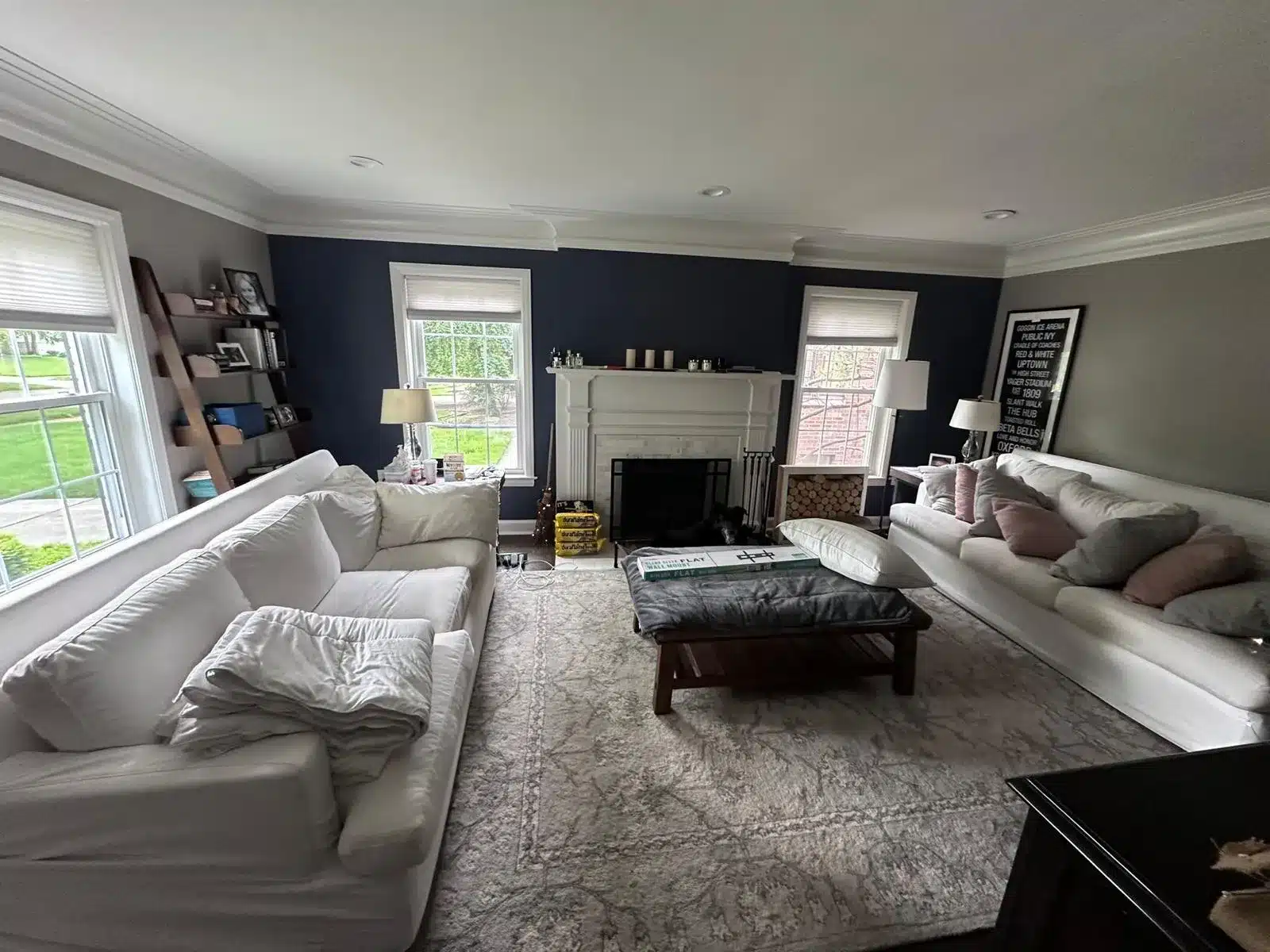
Every week, a Birmingham homeowner asks me the same thing about how long latex paint takes to cure. Is it really weeks? Or can furniture go back the next day? The honest question underneath that one is how long for paint to cure enough to survive a couch, a bookshelf, or a toddler’s shoulder. Nobody wants a mark left behind on a wall they just paid to have painted. If you just finished your interior painting project, or you’re planning one soon, this is the straight timeline. Read it before anything heavy touches that wall again.

How Long for Paint to Cure? Dry Time vs. Cure Time
Here is where most of the confusion starts. A wall is “dry” once the water in the paint evaporates. The surface stops transferring onto your finger. For most latex paint, that can happen in under an hour. Curing is a separate, slower process. It is the chemical hardening that lets the paint film resist pressure and daily contact. Without a full cure, paint dents. It sticks to furniture. It can even peel later.
Sherwin-Williams draws a clear line between the two in its own drying and curing guidance. Acrylic and latex wall paints typically need two to three weeks to cure fully. Oil-based paints can cure in as little as five days. That is because oil-based paint hardens through a different chemical process than water-based paint. The wall can look finished long before it’s ready for daily use.
Humidity plays a bigger role than most people expect. Water-based paint cures as moisture leaves the film and evaporates into the air. When the air around the wall is already damp, that moisture has nowhere to go. The cure slows down, sometimes by days, sometimes by weeks. This matters most in kitchens, bathrooms, and any room without good airflow.
Latex Paint Cure Time, Task by Task
Not every activity needs the full cure window. Some tasks are safe well before the wall is fully cured, and some are not. Here is a realistic breakdown for a standard latex or acrylic wall paint job.
| What You Want to Do | Safe Wait Time |
|---|---|
| Lightly touch the wall | 30 minutes to a few hours |
| Move light furniture back into the room | 24 hours |
| Hang picture frames or curtain rods | 3 to 7 days |
| Push a couch, bed, or bookshelf flush against the wall | 2 to 3 weeks |
| Wipe or wash the painted surface | 21 to 30 days |
These ranges assume normal room temperature and average humidity. A closed-up Birmingham kitchen running a dishwasher will sit on the longer end of these windows. So will a bathroom with the shower running daily.
What Happens When Furniture Goes Back Too Soon
An uncured paint film is still soft underneath. It can feel fine on the surface. Push a dresser against that soft film and the paint can bond to the furniture. Move the piece again, and the paint tears in small strips. A single early bump often turns into a visible patch that no touch-up brush can blend perfectly.
This is also where financial responsibility gets murky. The Painting Contractors Association maintains a national standard for touch-up and damage repair. That standard separates damage caused by a contractor’s work from damage that happens after the job is done. Furniture dents from moving in too early fall on the homeowner’s side of that line. That is exactly why the wait is worth respecting.
Why Birmingham, MI Homes Need a Little Extra Patience
Southeast Michigan swings between humid summers and dry, closed-up winters. Both conditions affect cure time more than most homeowners realize. Homes across Birmingham, Bloomfield, and Franklin often run central air in July and a furnace through January. Both systems change how quickly moisture leaves a painted wall.
Running the HVAC fan on low helps paint cure on schedule. So does cracking a window when the weather allows it. Skipping ventilation can add days, or even weeks, to the timeline above. A kitchen or bathroom feels this the most, since both rooms already carry extra moisture in the air.
How Visual Paint Sets You Up to Move Back In Sooner
A big part of getting furniture back in place quickly comes down to what happens before the paint ever goes on the wall. Our approach to interior house painting starts with protecting your furniture and covering your floors. We clean up daily, so the room stays livable while we work. We also apply the number of thin, even coats each surface actually needs, instead of one heavy layer that traps moisture underneath and stretches out the cure.
Every homeowner we work with gets a realistic timeline for when the room is ready for normal use again, not a vague “give it a few days.” That clarity is part of what a full-service interior house painting job should include from the start.
What Slows Latex Paint Cure Time Down
A few common habits stretch the wait longer than it needs to be:
Fixing any one of these can shave real time off the wait before your room feels finished again. None of them require special tools or extra cost. A little airflow and patience does most of the work.
Quick Checklist Before You Push That Couch Back